I’ve been reading a lot of books set in water-centric living communities recently—and really enjoying them! With climate change and rising sea levels quickly becoming a near-future reality, it’s fascinating to consider the various water-centric worlds authors conjure. Three of my recent reads have distinctly unique approaches to their watery worlds that help support the themes of the narrative in interesting and effective ways.
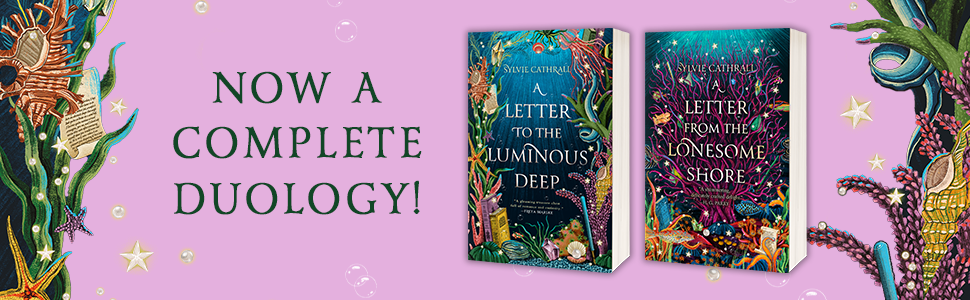
The Sunken Archive duology by Sylvie Cathrall
A Letter to the Luminous Deep and A Letter to the Lonesome Shore are epistolary cozy romantasy novels set in native water society—E. and Henerey’s world has always been watery, and their society is structured around that fact. E. lives in an underwater house called Deep House, built by her eccentric parents. She begins exchanging letters with Henerey, a scholar of marine creatures. Eventually, her Deep House is destroyed by a seaquake and both she and Henerey disappear, resulting in their siblings coming together a year later to find out what happened to them.
In the distant past, the people of E. and Henerey’s world lived in the clouds. A mysterious event called The Dive occurred, and the survivors and their descendants rebuilt their lives on the watery planet below. There are only small, sporadic land masses and islands. This is a deeply curious, scholar-based society. Each field has certain islands they’re based on, and it’s clear that one’s academic loyalties carry a lot of weight in this world (and somewhat determine whether or not you live on the limited land available, and where on it).
This duology has a bit of a 10,000 Leagues Under the Sea vibe, with some more futuristic tech that’s explained by the world building (underwater subs and suits) balanced with E. and Henerey’s snail mail. I really enjoyed this duology and would recommend it for fans of the Emily Wilde series. Book 2 gets deeper into the world building and exploring the truth behind The Dive, so without spoiling anything, this remains a main theme.
Ultimately, this book is more concerned with the characters than the world building, and E., Henerey, and their siblings really shine. However, each must wrestle with the realities of their world in their own way:
E. remains in her underwater house due to her anxiety and OCD despite having the mind of a scholar.
Gentle Henerey struggles with the rigorous academic demands of his college, finding in E. an empathetic soulmate.
Sophy wrestles with the restrictive nature of her college, ultimately leaving her academic field to pursue E. and Henerey.
This is the weakest of the 3 books in regards to tying the world building to the themes of the book, but it’s also the book with the most unique water world. There’s a lot to love about this series, and the cleverness of the world is part of that.
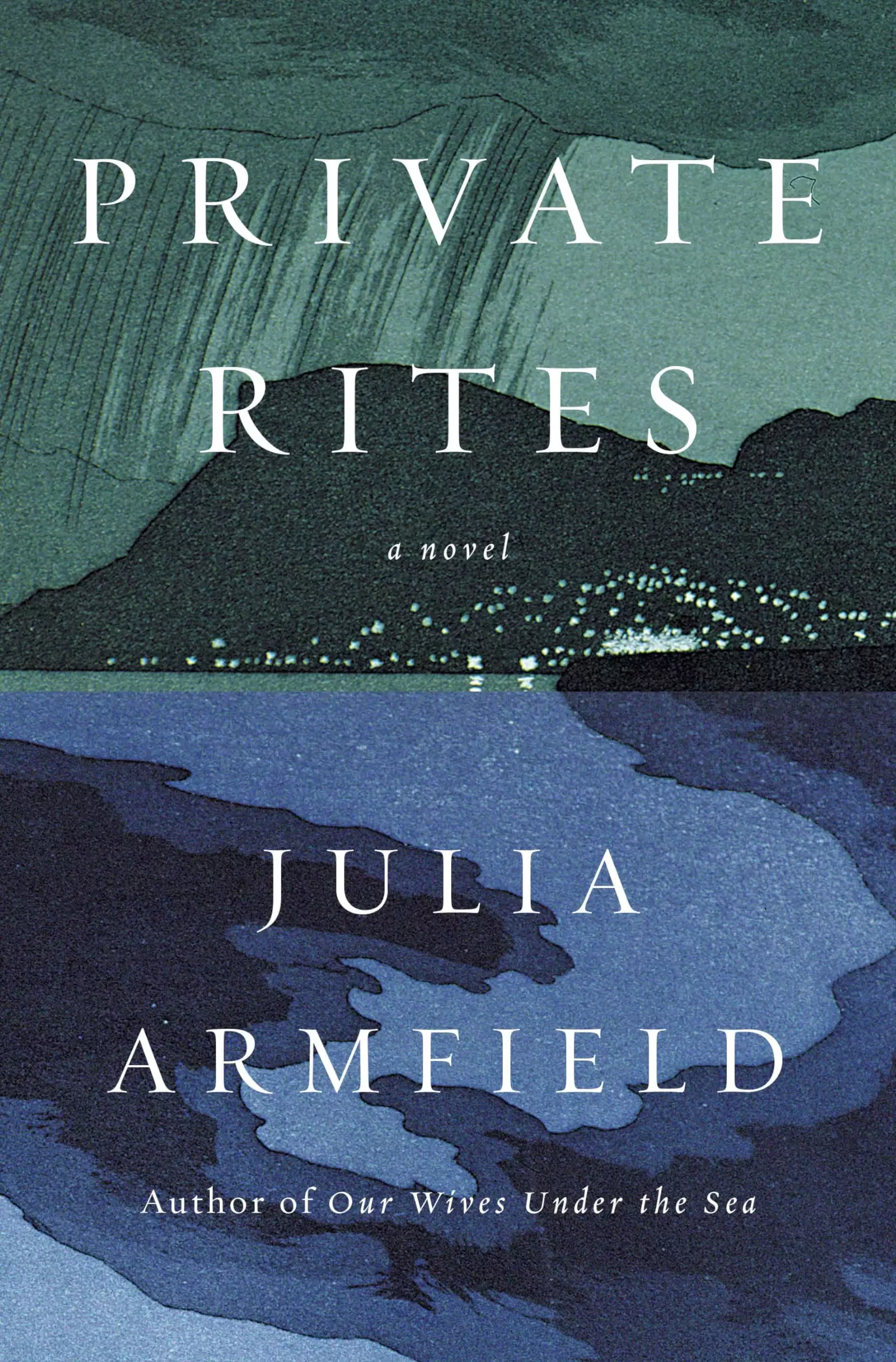
Private Rites by Julia Armfield
Private Rites is a retelling of King Lear that follows 3 queer sisters after the death of their father while navigating life in a drowning world.
This world is much more similar to our own. The water levels have continuously risen, eating away at the liveable land and changing the shape of how people live. Instead of this being caused by climate change, it’s caused by near-constant rain, which gives this book a heavier, almost oppressive atmosphere at times. Reading it, I truly felt the dreary weight of the grey, wet days Armfield describes.
This book also centers on a house built by an eccentric parent: in this case, the sister’s recently passed father who was an architect revered for his work while being deeply cruel within his own walls. The sisters are left with the house after his death and must decide what to do with it, even as the water creeps in and they’re weighed down by the memories of their childhoods.
Private Rites is to sisterhood what Our Wives Under the Sea is to grief and loss. Both feature a particularly watery horror that Armfield excels at writing, but Our Wives doesn’t take place in a fully water-centric world the way this book does. This book felt more like how I imagine water may feel to people who live on the coast when our sea levels begin to noticeably rise. It seeps in to every crack, it softens the ground before overtaking it, it steals plants and animals who once would have thrived and now drown. It viscerally illustrates the creeping intensity of inevitable climate catastrophe—and yet, people keep living. People keep dying. People keep falling in and out of love. This is a society resigned to its own destruction, and yet life carries on despite it all.
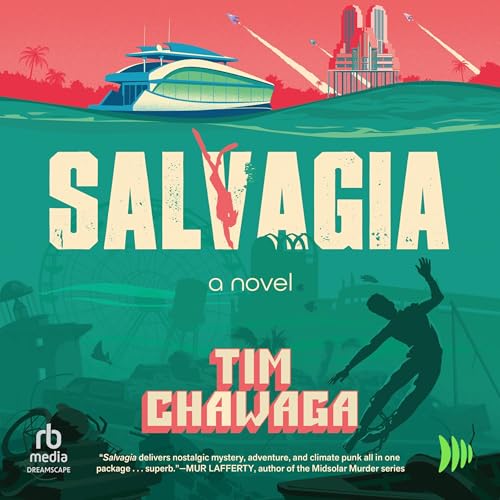
Salvagia by Tim Chawaga
This new release was shared with me by Books Forward PR as an ARC. Described as a sci-fi mystery, this story is set in a near future America that has seen climate catastrophe and is now rebuilding in a deeply changed world. Our main character, Triss, dives for nostalgic salvage, or “salvagia”, off the coast of what was once Florida.
She lives in a world controlled by an authoritarian government and corporate mafias—most people find themselves stuck between a rock and a hard place when trying to live under the competing interests. However, a small group of people hope for a “Third Way”, a different option for how to live that’s not determined by the feds or corporations.
This was a particularly interesting approach to a post-climate collapse America. As Triss’s backstory unfolds, we learn more about what’s happened as climate change ravaged the country. Despite some sci-fi elements, much of this world building felt like a realistic possibility—especially the rise of corporate mafias. It’s distinctly dystopian, offers few answers, yet remains much more hopeful than Armfield’s story.
Chawaga explores the fraying results of climate change: on landscape, culture, values, and memory. When our world drowns, what do we long to bring back? What do we miss? Each of the main characters and powerful players in this book longs for something different, each reaching for their own piece of a past world long gone.


